Empanadas at a Buenos Aires Tango Show: What They Are, and Who Actually Serves Them
What's inside an Argentine empanada, which filling to order first, and which Buenos Aires tango venues build them into the ticket rather than just mentioning them on the menu.
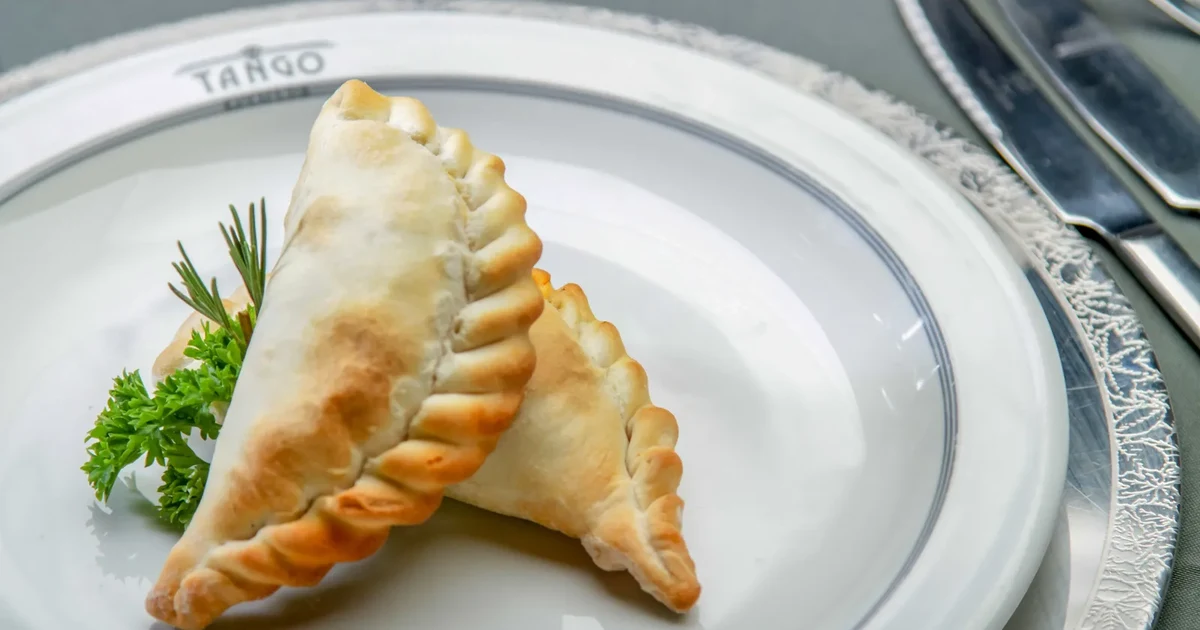
Empanadas are the one Argentine dish that shows up on almost every tango-house menu, somewhere. At most venues that means one option among several starters. At two of the eight compared on this site it means something more specific: Café de los Angelitos puts two of them straight into the base ticket, and Tango Porteño sells them as a booking tier in their own right. If you are trying to work out what you are actually ordering, that distinction is worth five minutes before you book.
Check Availability
What Is an Argentine Empanada?
An empanada is a small filled pastry: dough wrapped around a savoury (occasionally sweet) filling, sealed along the curved edge, then baked or fried. The idea travelled across Latin America and Spain generations ago, but Argentina built its own strong regional tradition on top of it, and Buenos Aires kitchens draw on most of it — you will meet everything from a plain beef filling to versions built around cheese, chicken, ham or vegetables in the same evening.
The seal along the edge is not just construction. It is folded into a pattern called the repulgue, and in provinces with a strong empanada culture the folding style is often used to signal what is inside before anyone bites in. At a tango house you will not need to read the pastry — the menu tells you — but it is worth recognising if you order from a specialist elsewhere in the city.
Which Filling Should You Order?
Carne — plain beef, usually seasoned with onion, paprika and cumin, sometimes with egg or olives folded through it — is the one to start with if you eat meat. It is the closest thing Argentina has to a default empanada, and every list below is built as a variation on it.
| Filling | What it is | Vegetarian |
|---|---|---|
| Carne | Beef, onion, paprika, cumin | No |
| Carne picante | A spiced-up version of the beef filling | No |
| Pollo | Chicken | No |
| Jamón y queso | Ham and cheese | No |
| Queso y cebolla | Cheese and caramelised onion | Yes |
| Humita | Sweet corn, usually with a bit of cheese | Yes |
| Caprese | Tomato, mozzarella-style cheese, basil | Yes |
| Verdura | Spinach or chard, often with cheese | Yes |
If you want something with a kick, carne picante is the one to ask for — most Argentine empanadas are mild by design, so plain carne or pollo won’t surprise you. Once you have tried a beef one, humita is the most useful contrast: sweet where carne is savoury, and it tells you fairly quickly whether you prefer the meat versions or not.
Baked or Fried?
You will see both, and neither is the “correct” one. Empanadas al horno (baked) have a lighter, drier pastry shell — this is what you will get in the photo above and at most tango-house dinners, since a kitchen plating a few hundred covers favours the version that holds up in a tray. Empanadas fritas (fried) have a richer, crisper shell and turn up more often at specialist empanada counters and casual restaurants than at a formal dinner-show table.
Regional Styles Worth Knowing
Argentina’s provinces did not agree on one empanada, and you will hear the regional names mentioned even in Buenos Aires:
- Salteñas (Salta, the northwest) — finely chopped rather than minced beef, often with potato, egg and onion. Widely considered the country’s benchmark version.
- Tucumanas (Tucumán) — hand-cut beef, onion, egg, with a seasoning profile locals will tell you is distinct from Salta’s, at length, if you ask.
- Mendocinas (Mendoza) — beef, onion, egg and usually olives.
- Cordobesas (Córdoba) — often a touch sweeter, sometimes with raisins worked into the beef filling.
A tango-house kitchen is not trying to replicate any one province exactly — it is serving a competent, general Buenos Aires version to a large room on a schedule. If chasing a specific regional style is the point of your trip, a specialist empanada restaurant will get you closer than any dinner show will.
Which Tango Venues Actually Serve Empanadas?
This is where it stops being generic and starts mattering to what you book.
Café de los Angelitos puts two empanadas and a glass of wine or a soft drink into the base ticket, before you have bought any dinner upgrade at all. Nowhere else on this site does that — everywhere else, the plain admission ticket is just a seat.
Tango Porteño goes a step further and sells admission with empanadas and unlimited drinks as a genuine middle tier, sitting between the bare ticket and the full three-course dinner. If what you actually want is something in your hand and something on the table without committing to ninety minutes of table service, that option — not the dinner package — is the one to look for in its booking dropdown.
At the other six venues, an empanada is one possible starter among several rather than a defining feature of the ticket, and whether it shows up on a given night depends on the menu grade you book. Our tango dinner show menu guide sets out what each venue actually serves course by course.
Are Empanadas a Good Alternative to the Full Dinner Package?
For some travellers, genuinely yes. If you have booked a show-only ticket and do not want a heavy restaurant dinner beforehand, a couple of empanadas is close to the ideal pre-show bite: quick, inexpensive, distinctly Argentine, and light enough that you are not fighting a full stomach through ninety minutes of tango.
Choose the full dinner package if you want one complete evening in a single booking, dinner is part of the occasion rather than a formality, you want steak and dessert as well, and having the drinks included matters.
Choose empanadas plus a show-only ticket if you want a lighter evening, dislike large late dinners, are trying to trim the total cost, or simply want more of the night free to see the city before curtain.
San Telmo is the easiest neighbourhood for this version of the evening — casual Argentine food, including empanada counters, within walking distance of two or three tango venues. Our guide to where to eat before or after a tango show works through the options by neighbourhood, and Argentine steak and tango shows covers the version of this same trade-off built around a parrilla dinner instead.
Empanadas and Dietary Requirements
Vegetarian: straightforward. Queso y cebolla, humita, caprese and verdura are all standard vegetarian fillings and reasonably easy to find, including at tango houses.
Vegan: possible, but less predictable at a tango dinner show than at a specialist empanada shop or a modern restaurant — a tango kitchen’s fixed menu is built around dairy-heavy fillings and pastry that is not always egg-free, so confirm at booking rather than assuming. Our vegetarian, vegan and gluten-free guide sets out which of the eight venues on this site actually cater for it.
Gluten-free: no, not in the traditional form. Standard empanada dough is wheat-based, so if coeliac disease or a gluten intolerance is a hard requirement, flag it at booking and expect a substituted starter rather than an adapted empanada.
Children: usually an easy option. The small size and generally mild fillings make empanadas one of the more forgiving Argentine dishes for younger, less adventurous eaters.
Useful Spanish for Ordering
| Spanish | English |
|---|---|
| Una empanada de carne, por favor. | One beef empanada, please. |
| ¿Qué sabores tienen? | What flavours do you have? |
| ¿Cuál me recomienda? | Which one do you recommend? |
| ¿Es picante? | Is it spicy? |
| ¿Tiene carne? | Does it contain meat? |
| ¿Es vegetariana? | Is it vegetarian? |
| ¿Tienen empanadas sin gluten? | Do you have gluten-free empanadas? |
Frequently Asked Questions
Which tango show includes empanadas?
Two, specifically. Café de los Angelitos includes two empanadas and a glass of wine or soft drink in its base ticket before any dinner upgrade. Tango Porteño sells admission with empanadas and unlimited drinks as a middle tier between the bare ticket and the full three-course dinner. Elsewhere, an empanada is one possible starter rather than a feature of the ticket itself.
What is the most traditional empanada filling?
Carne — beef, usually with onion, paprika and cumin — is the classic first order and the benchmark against which every other filling gets compared. If you eat meat and are trying only one, make it this.
Are Argentine empanadas spicy?
Not usually. Most fillings, including plain carne, are mild. If you specifically want heat, ask for carne picante.
Are empanadas baked or fried?
Both exist. Baked (al horno) is lighter and drier; fried (fritas) is richer and crisper. Tango dinner shows lean towards baked, since it holds up better when a kitchen is plating for a large room; fried versions turn up more at specialist counters.
Are vegetarian empanadas available?
Yes. Queso y cebolla, humita, caprese and verdura are all standard vegetarian fillings, and they are reasonably easy to find at tango houses as well as everywhere else.
Are empanadas vegan or gluten-free?
Rarely both, and not by default. Traditional pastry is wheat-based, so gluten-free is a no unless a venue explicitly substitutes another starter. Vegan is possible but inconsistent at a tango dinner show specifically — confirm at booking rather than assuming.
How many empanadas make a meal?
As a rough guide: one is a normal starter, two makes a light snack, and three or four is a simple meal for most appetites. At a tango dinner show, one or two as a starter is plenty — there is a main course and dessert still to come.
Can I eat empanadas instead of booking the tango-show dinner?
Yes, and for some travellers it is the better plan. Buy a show-only ticket, eat a couple of empanadas beforehand — in San Telmo, if you want tango venues within walking distance — and you get a lighter, cheaper evening without giving up the show.
Worth Trying Either Way
If you eat meat, order at least one beef empanada while you are in Buenos Aires — as the opening course of a full dinner package, as a quick bite before a show-only ticket, or as the start of a proper parrilla meal. It is inexpensive, unmistakably Argentine, and if it arrives just ahead of a glass of Malbec and a live tango orchestra, it is doing exactly the job it is supposed to do.
Different Question?
Still Deciding Which Show to See?
This site is for people who have already settled on dinner with the show and want to know what arrives at the table. If you are still choosing between venues — or wondering whether to skip dinner altogether — our sister site covers that side properly.
- Which venue should I actually pick?
- What time do tango shows start?
- Can I just buy a ticket, no dinner?
- What is a milonga, and where do locals dance?
- Where can I take a tango class?
- What should I wear?
Sit Down Before the Curtain Goes Up
At Señor Tango dinner is served from 7:00pm and the show starts at 9:00pm. The Executive menu is three courses with unlimited house wine, beer and soft drinks; the VIP menu upgrades that to an open bar. Show-only seats start at $51 and include no drinks at all, which is the whole decision in one sentence.
Check Availability & Book